Most guides to Lefkada focus on the beaches, sailing and watersports—and rightly so. But the island’s interior is a different world: limestone mountains, stone villages, forest monasteries, and a living tradition of music and dance. The fact that so few visitors see it is part of what keeps it intact. Our perfect guest wants more than a sunbed. You’ll swim, of course: Lefkada’s beaches are among the most beautiful in Greece, and in spring or autumn, when the sea is bracing and the sand is empty, you may have them to yourself. But you also want to explore the island, and more than that, to understand it.
Lefkada out of season
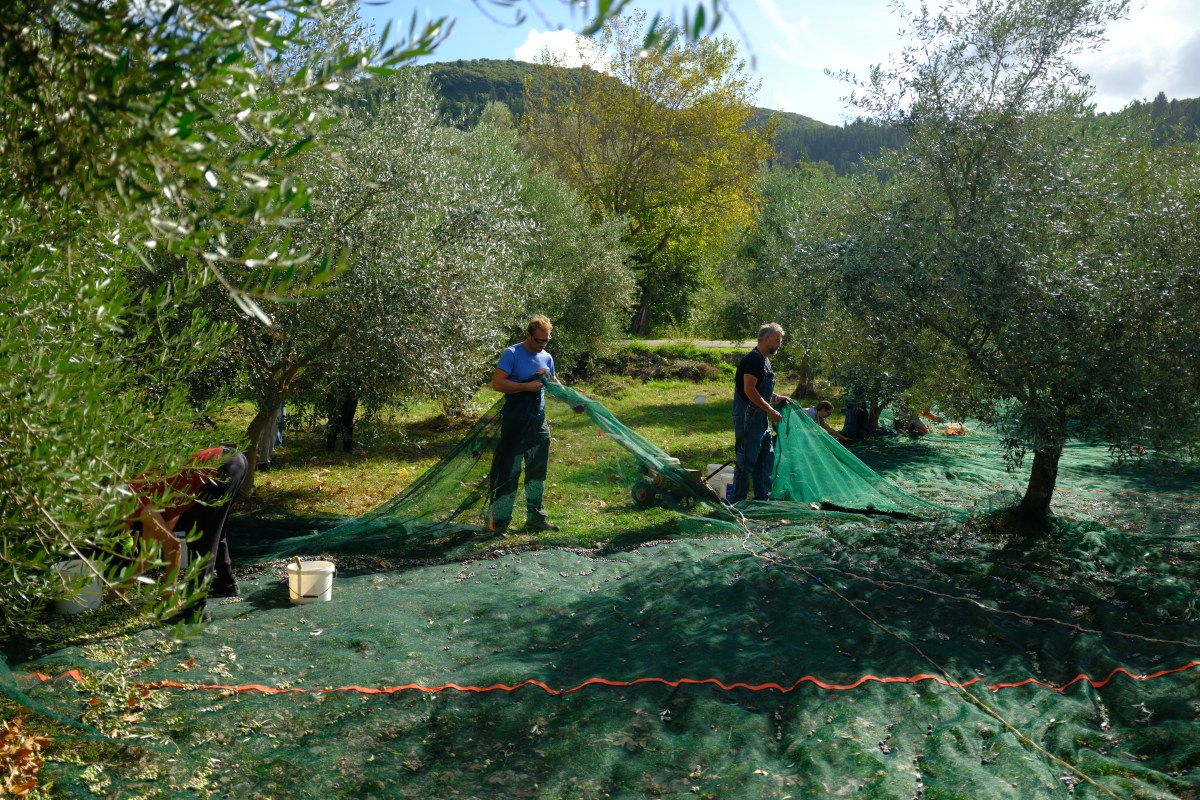
Spring brings wildflowers and easy walking weather. When the summer peak is over, Lefkadians get back to the island’s own work: the grape and olive harvests, the fields, the flocks and the gardens. Come then and you’ll see the island as it really lives, with warm seas still to swim in. Even winter has clear days in the mountains. Midsummer is beautiful but hot, so walk early and take care. Out of season, ask in our Facebook group which tavernas are open. Getting here is easy: fly to Preveza from March to October, or via Athens in winter. See When to hike for what’s happening month by month.


Stay in the villages
The mountain villages have stone houses to rent, tavernas where the locals eat, and trails from the door. Buy honey, olive oil, lentils and wine from the people who make them. A euro spent in a village goes further than one spent anywhere else on the island.

Walk the old paths
Choose a walk in the Trail Finder, follow it on your phone with Guide Me, or carry the book. Use the buses and taxis to link walks together. The monopati were built by generations of villagers, and walking them is what keeps them open.
Discover the island
This site sets out to tell you more about Lefkada, so that when you visit you see beyond the beaches and beyond the sailing, into the heart of the island. That isn’t just a tourism cliché. Behind every view there’s a story, and we tell it as carefully as we can, with sources: the earthquakes that shaped the mountains; the wildlife you’ll meet on the paths; the history of the island from the Neanderthals to the wine boom of the 1880s; the ancient towers hidden in the olive groves; the monasteries, for centuries among the island’s biggest landowners; the music and dance that still fill the village squares; the debate over Homer’s Ithaca; and the 20th-century life of the mountain villages, told in the novel The View from Skaros. Start with a village such as Alexandros, or follow the first Christians on our Early Churches Walk.
For local businesses
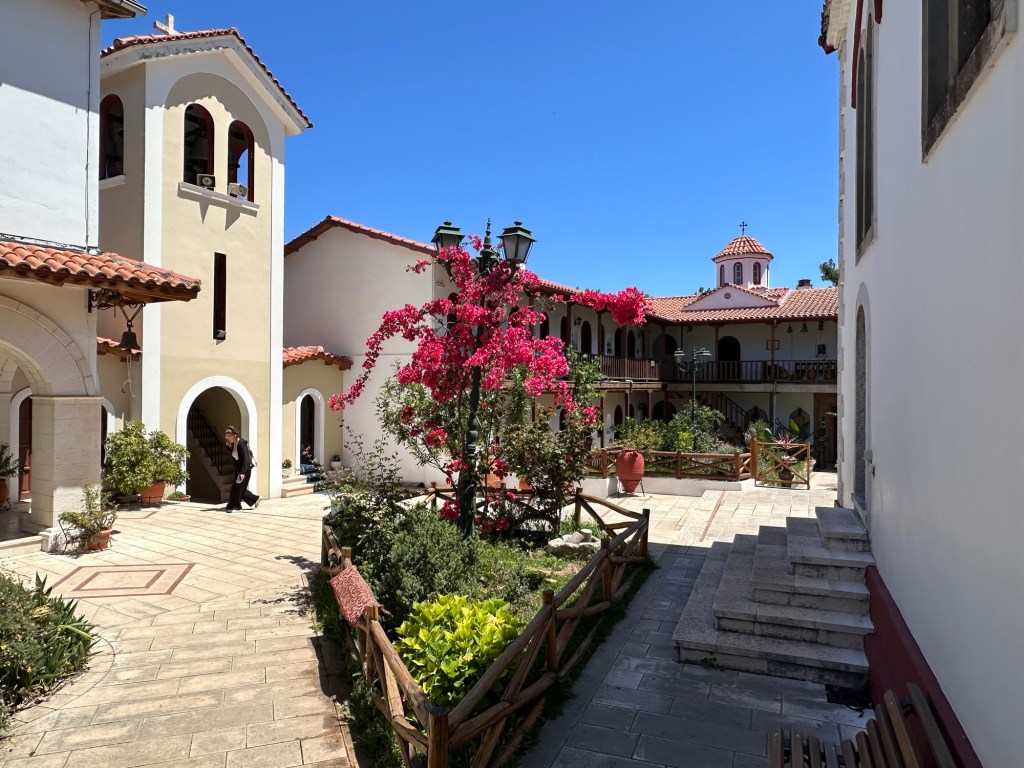
If you run a taverna, hotel, villa or tour company on Lefkada, our trails can help you welcome guests like these outside the summer peak. Our trails, maps and GPX files are free to use. Link to us, tell your guests about Guide Me, or create guided walks of your own. To get in touch, find us in our Facebook group.
We’re not alone in believing that Lefkada’s own character is its greatest asset. A study of tourism on the Lefkada islands found that the island too often tries to copy Mykonos and Santorini instead of building on its local identity, and argued that walking, nature, culture and village life are the way to bring visitors outside the summer peak (Panagiota Anagnostopoulou, Lefkada Islands: Sustainable Tourism Destination, master’s thesis, Harokopio University of Athens, 2019). Twenty years earlier another study had reached the same verdict. It found tourism on Lefkada driven by the package-tour operators, with short-term profit put before the island’s future, and farm workers leaving the land for the beach resorts, so that the mountain villages emptied and the olive picking and wine-making that sustained them died away. Its answer was visitors all year round, farm stays, and walking on paths made for the purpose (Maria Andreoudi, What Went Wrong: Tourism Development on the Island of Lefkada, Greece, master’s thesis, Lund University, 1999).
We’re independent and don’t take advertising or paid listings. More about us.