You can walk on Lefkada in any month. Spring and autumn are the best: warm days, cool nights, green hills and very few people on the paths. Summer is for early starts, shade and swimming. Winter is quiet, green and often surprisingly bright between the rain. Each season has its own reasons to come. Here is what to expect, what you’ll see, and which walks suit the time of year.
Spring March to May
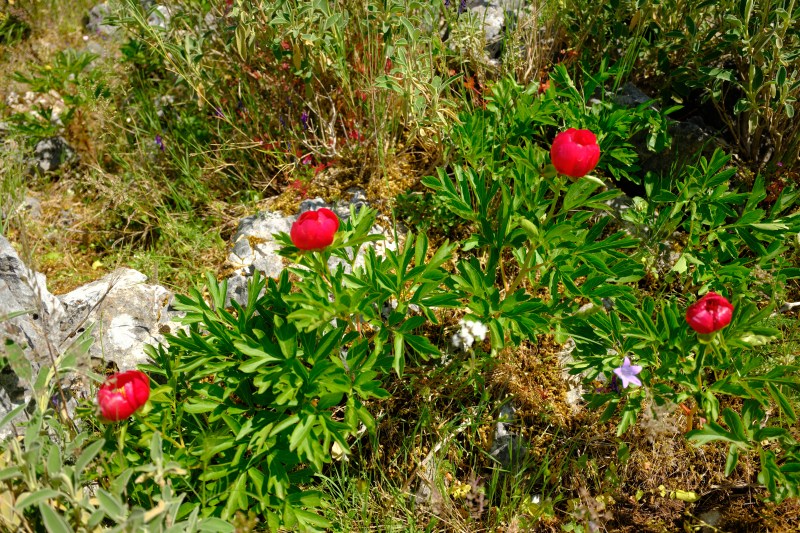
The island at its greenest. Streams are running, the gorges are full of sound, and from March the wildflowers start. In April and May every field and hillside is filled with flowers of all kinds — it is stunning — and the high lentil fields are a carpet of colour. Look out for wild orchids on the rocky slopes. On warm evenings fireflies light up the meadows, and the oak forests are loud with birdsong.
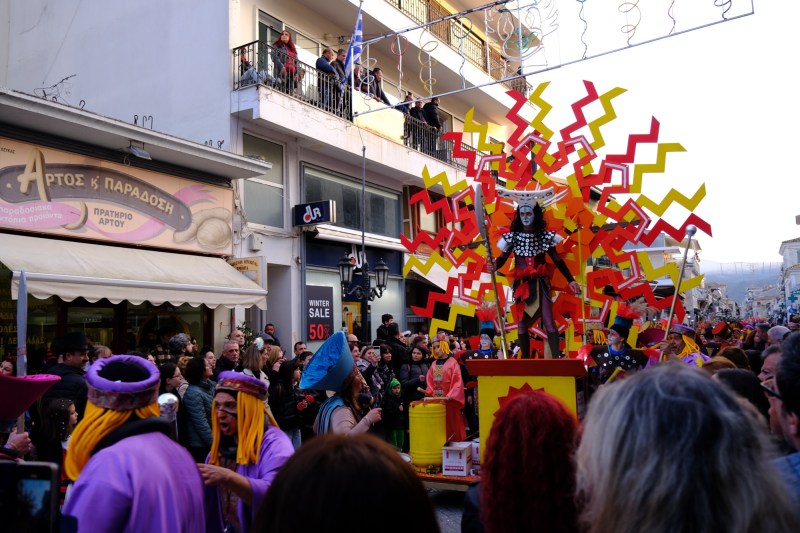
Spring starts with Carnival (Apokries), seven weeks before Orthodox Easter, so in late February or March. Lefkada’s carnival parade is well worth seeing: each village competes to have the best float and the best dancers. It’s a big public party, and visitors are very welcome to join the crowds.
Easter is the biggest festival of the year. Orthodox Easter usually falls on a different date from Western Easter, so check before you book. Many tavernas open only just after Easter, because locals keep the Lent fast — though shellfish is allowed, so the shops are full of it. Village churches hold candlelit processions on Good Friday and midnight services on Saturday, with fireworks and roast lamb on Sunday, and in Lefkada Town clay pots are smashed from the balconies. You are welcome to watch and take part, but remember that Easter is above all a religious occasion, not a show: dress modestly, keep quiet in church, and be respectful with your camera.
| Month | Day / night | Rain | Sea | What’s happening |
|---|---|---|---|---|
| March | 15° / 8° | 60–80 mm | 15° | Flowers begin; streams running; Carnival (some years); first flights |
| April | 18° / 11° | 40–60 mm | 16° | Excellent walking; fields full of flowers; orchids; Easter; fireflies |
| May | 23° / 15° | 20–40 mm | 19° | Peak wildflowers; lentil fields in flower |
Walks to try: the Kolyvata to Skaros forest loop for oaks and birdsong, the Katouna valley loop while its stream is running, and the lentil fields above Eglouvi in May for flowers. Spring is also the best time for the Lefkada Trail.
Summer June to August
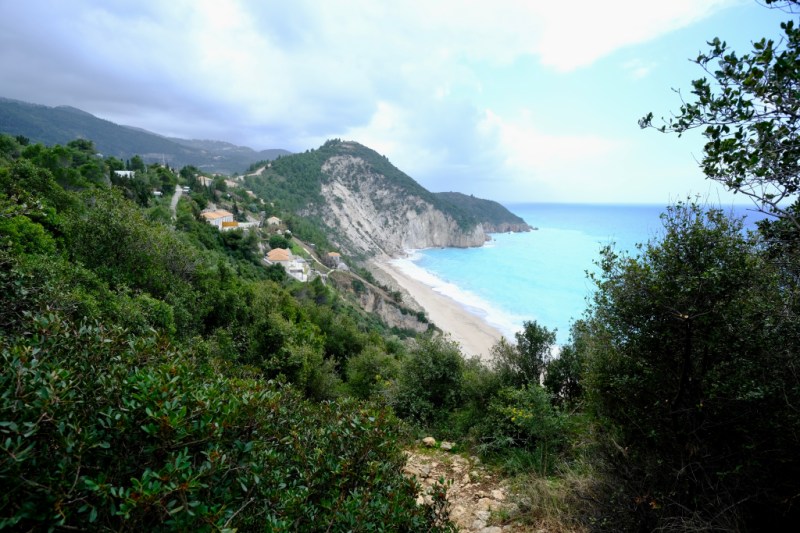
Hot, especially in July and August, when it is over 30°C most days. Walk early, carry plenty of water and pick shade: an oak forest, a gorge, or the springs and waterfalls that flow all year at Syvros and Dimosari above Nidri. Then swim — the sea is at its warmest in August. On the hottest days we’d go to the beach instead. See Safety for heat advice.
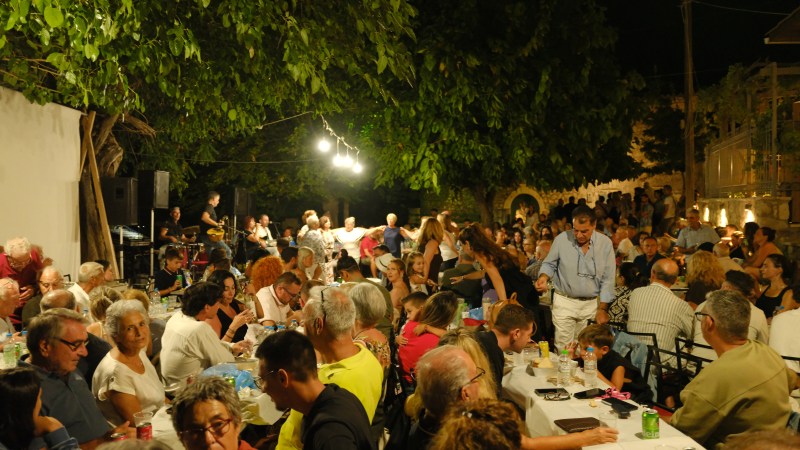
Summer is the season of festivals — music, dancing and food late into the night. The big ones welcome everyone:
- 7 July — Agia Kyriaki, celebrated in Nidri and Vlychos.
- 6 August — the lentil festival at the chapel of Agios Donatos, high above Eglouvi. A church service in the evening, then a thousand people queue for lentil soup with sardines and olives, and the music and dancing go on late. You can walk up on the old monopati.
- August — Karya puts on a traditional Greek wedding for visitors: the bride in the old costume, and a procession through the village. Great fun — come and join in.
- 15 August — the feast of the Virgin Mary, and the island’s biggest pilgrimage, to the Monastery of Faneromeni at Frini above Lefkada Town.
- Last week of August — the International Folklore Festival in Lefkada Town, held every year since the 1960s, with a parade and dance groups from around the world.
Almost every village also has its own panigiri on the feast day of its church. These are real local celebrations, not a show for visitors. Greeks are famously hospitable to strangers, and you’ll be made welcome — just don’t take advantage of it: come as a guest, buy your food and drink, join the dancing if you’re invited, and always ask before photographing people.
| Month | Day / night | Rain | Sea | What’s happening |
|---|---|---|---|---|
| June | 28° / 19° | 10–20 mm | 23° | Getting hot — walk early; swimming starts |
| July | 31° / 21° | 0–10 mm | 26° | Hot — shaded routes; village festivals; Agia Kyriaki 7 July |
| August | 31° / 21° | 0–10 mm | 27° | Walk and swim; lentil festival 6 Aug; Karya wedding; Faneromeni 15 Aug; folklore festival |
Walks to try: shaded trails, waterfalls, short walks to beaches such as Agios Nikitas to Mylos, and the Mount Elati five peak loop, high and airy, early in the morning.
Autumn September to November
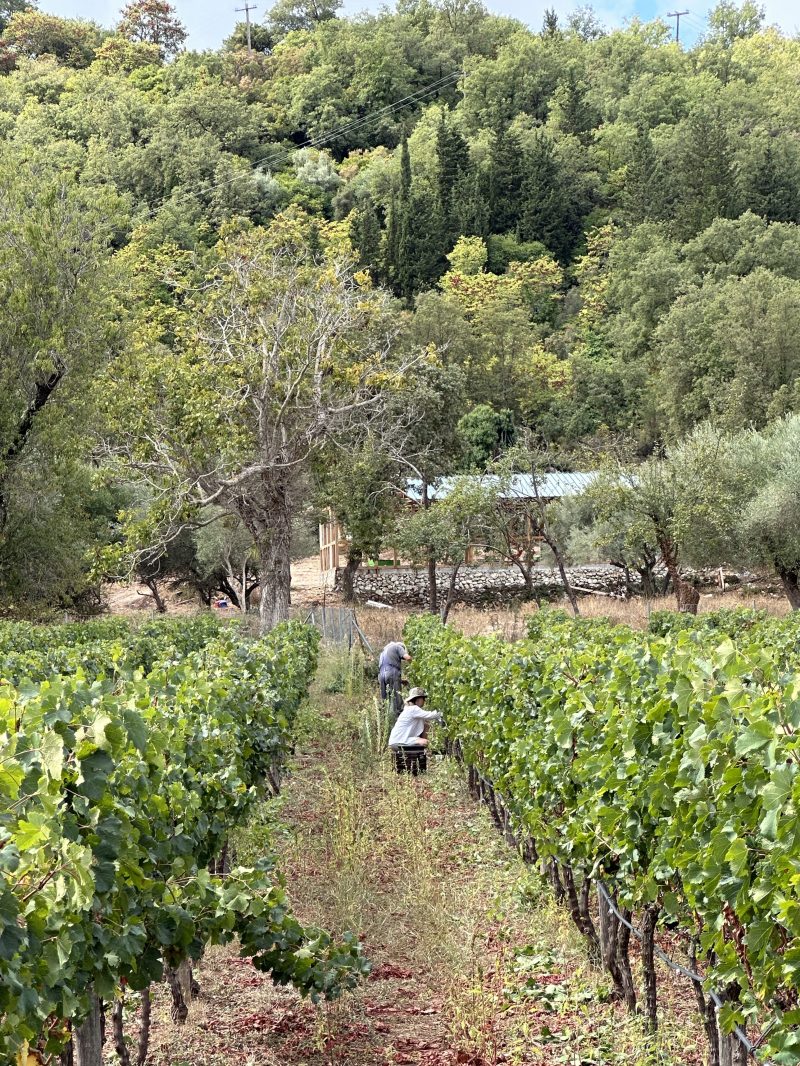
Our favourite season. The sea is still warm enough to swim into October, the days are comfortable and the summer crowds have gone. The grape harvest is in September. Summer usually ends in October with a huge thunderstorm, and the rain turns the hills green again and brings a second batch of flowers. From late October the forests turn colour.
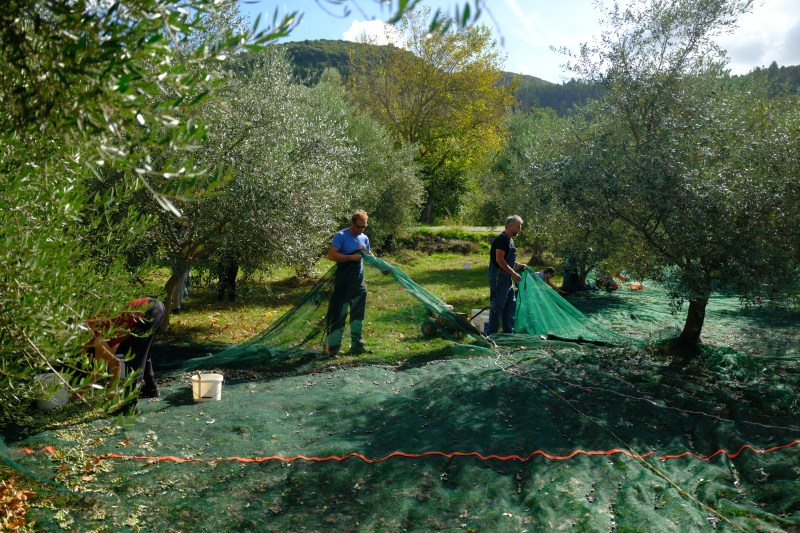
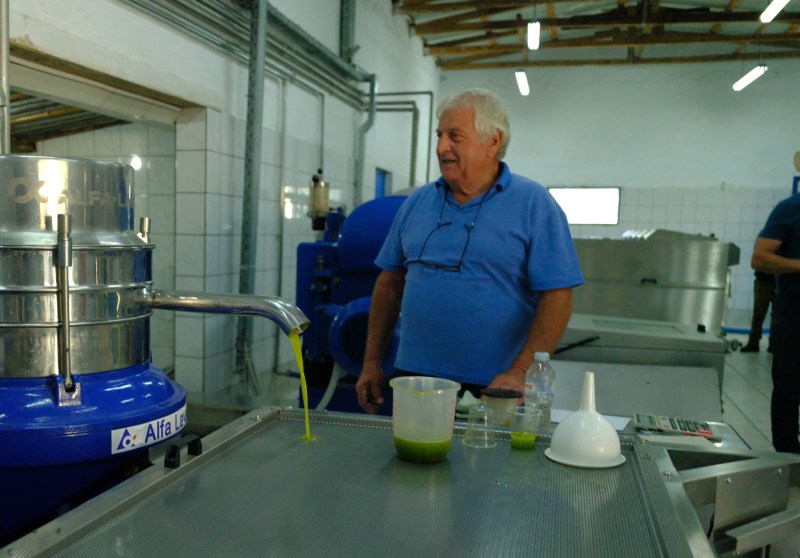
In November the olive harvest begins. You’ll see nets spread under the trees and whole families out picking, and the olive presses run day and night. Hunting season runs from late August to February, mostly on Wednesdays, Saturdays and Sundays, so wear something bright in the woods. Many tavernas and hotels close in mid-October.
| Month | Day / night | Rain | Sea | What’s happening |
|---|---|---|---|---|
| September | 28° / 19° | 20–40 mm | 25° | Great walking, warm sea; grape harvest |
| October | 23° / 15° | 40–80 mm | 23° | Perfect walking; a big thunderstorm ends the summer; second flowering |
| November | 18° / 11° | 80–100 mm | 21° | Variable but walkable; olive harvest begins |
Walks to try: the peaks on a clear day — Stavrotas, Lefkada’s highest — the coast round Poros cape with a swim to finish, and the Lefkada Trail again.
Winter December to February
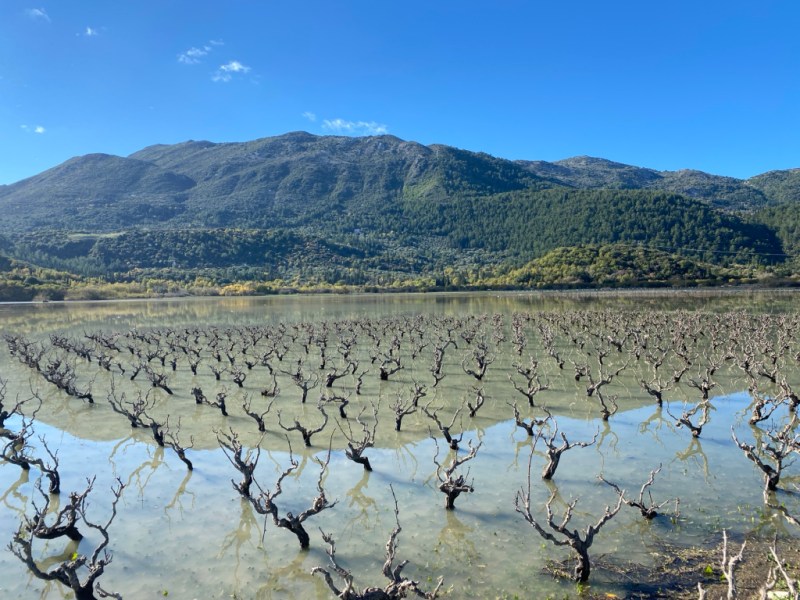
Cool and wet, with most of the year’s rain, but between the storms there are crisp clear days with long views. The hills are green, streams and waterfalls are at their best, and the Karya plateau often floods into a lake (see Geology). High trails can be muddy and paths overgrown, so lower and coastal routes are often better. Take care with loose rocks after heavy rain.
It is very quiet. Outside Lefkada Town little is open, and Aktion-Preveza airport has no flights, so you’ll come via Athens (see Getting to Lefkada). Ask in our Facebook group which tavernas are open. Karya celebrates its saint, Agios Spyridon, on 12 December, and Christmas, New Year and Epiphany (6 January, the blessing of the waters) are celebrated in every village.
| Month | Day / night | Rain | Sea | What’s happening |
|---|---|---|---|---|
| December | 14° / 8° | 100–120 mm | 18° | Cool, green, quiet; olive harvest; Agios Spyridon in Karya 12 Dec |
| January | 12° / 6° | 100–120 mm | 16° | Green and quiet; Epiphany; waterfalls in full flow |
| February | 13° / 6° | 90–110 mm | 15° | First almond blossom; Carnival parade (some years) |
Walks to try: the Early Churches walk near Lefkada Town, the Kontarena loop in the south, the Alexandros three villages loop, and Klousouria Gorge when the stream is running.
Temperatures are typical daytime highs and night-time lows; rain is the monthly total; sea is the average temperature. A rough guide — every year is different.
Before you go, read Safety and Getting around — buses are much less frequent out of season. Then find a trail.